Monero’s XMR Soars Past $500 in Stunning 2025 Rally as Zcash Governance Crisis Unfolds
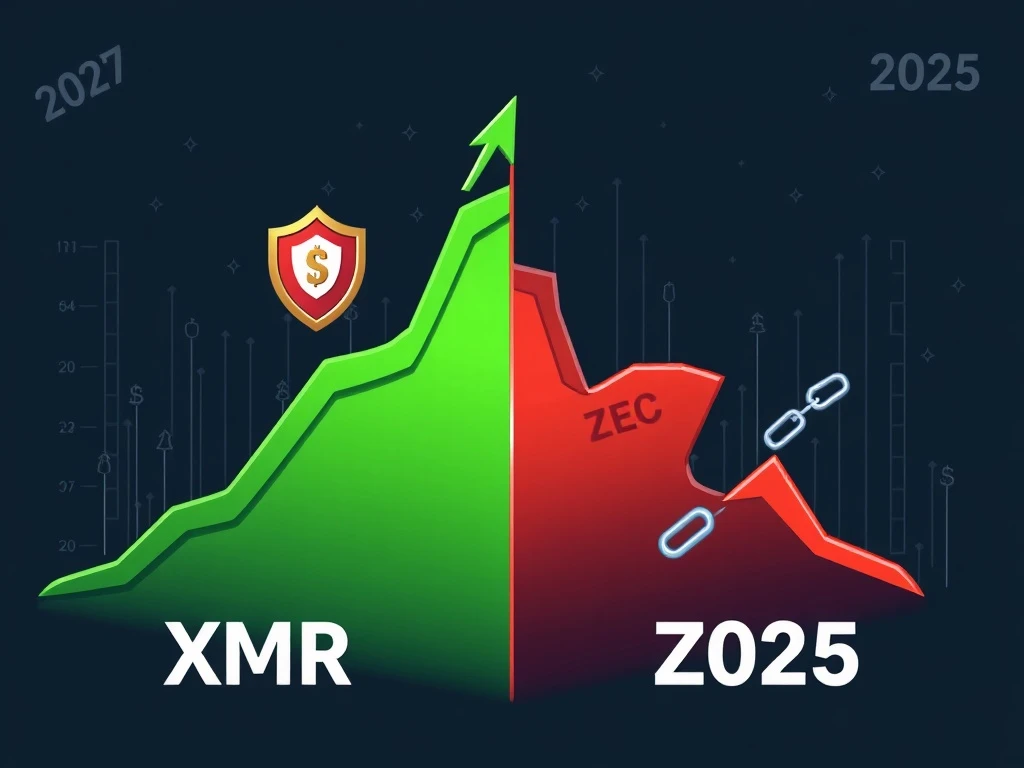
In a dramatic market shift that highlights the volatile nature of privacy-focused cryptocurrencies, Monero’s XMR token has surged past the $500 psychological barrier for the first time since May 2021, creating a pivotal moment for digital asset investors in early 2025. This remarkable price movement coincides with significant governance turmoil at rival privacy project Zcash, presenting a clear case study in how internal stability impacts cryptocurrency valuation during critical market phases. The contrasting fortunes of these two leading privacy coins reveal deeper trends about investor preferences, regulatory adaptation, and technological resilience in the evolving digital currency landscape.
Monero’s Historic Price Breakthrough and Market Context
Monero achieved its $500.66 price point on Sunday, January 12, 2025, marking a 6% single-day gain and an impressive 20% weekly increase. This surge brings XMR within striking distance of its all-time high of $517.50, established nearly four years earlier in April 2021. The cryptocurrency’s performance stands in stark contrast to broader market trends, demonstrating specific sector strength rather than general crypto market bullishness. Analysts immediately noted the significance of this breakthrough, particularly given XMR’s historical resistance around the $500 level.
Several technical factors contributed to this price movement. First, Monero has maintained consistent development progress throughout 2024, with regular network upgrades enhancing both privacy features and scalability. Second, increasing institutional commentary from firms like Grayscale and Coinbase has highlighted privacy coins as a growing investment theme. These reports consistently cite rising demand for financial confidentiality tools in an increasingly regulated global financial system. Third, Monero’s mining algorithm remains ASIC-resistant, preserving its decentralized mining distribution compared to many proof-of-work cryptocurrencies.
The Zcash Governance Crisis and Its Market Impact
While Monero celebrated its price milestone, the Electric Coin Company team behind Zcash resigned en masse on Wednesday, January 8, 2025. Their collective departure cited intolerable working conditions and fundamental disagreements with the Zcash Foundation board regarding project assets and strategic direction. This governance crisis exposed deep structural rifts within Zcash’s leadership framework, particularly concerning the Bootstrap Project and ongoing funding allocation decisions.
The market response proved immediate and severe. ZEC’s price plummeted over 20% in the days following the mass resignation, reaching a weekly low around $360 over the weekend. This dramatic decline represents more than a simple price correction; it reflects investor concerns about project sustainability, development continuity, and long-term viability. The timing proved particularly unfortunate as privacy coins generally gained attention from institutional investors seeking alternatives to transparent blockchain transactions.
Comparative Analysis: Why Monero Gained While Zcash Faltered
Several structural differences explain the divergent paths of these privacy-focused projects. Monero operates with a different governance model that emphasizes community consensus and avoids centralized corporate control. The project’s funding mechanism through tail emission provides predictable, ongoing development resources without reliance on foundation decisions or speculative treasury management. Additionally, Monero’s privacy approach uses mandatory privacy for all transactions, creating uniform protection rather than Zcash’s optional privacy model.
Market analysts observed that traders appeared to favor Monero as the cleaner privacy exposure amid Zcash’s uncertainty. This preference reflects broader cryptocurrency market maturity, where investors increasingly differentiate between projects based on governance stability and development consistency rather than purely technological features. The situation demonstrates how governance risks can outweigh technological advantages in cryptocurrency valuation, particularly during periods of market uncertainty.
Technical Analysis: Historical Patterns and Future Scenarios
Technical analysts immediately examined XMR’s historical price behavior for clues about potential future movements. The cryptocurrency has attempted to break above its previous resistance levels seven times in recent years, with each attempt failing and resulting in significant corrections ranging from 40% to as much as 95%. These corrections typically found support at ascending trendline levels, creating a consistent pattern of resistance and recovery.
The current situation presents two distinct potential outcomes based on historical precedent. If XMR fails to maintain its position above the $500–$520 resistance zone, technical analysis suggests a possible correction toward the $200–$270 range. This area aligns with lower trendline support and key Fibonacci retracement levels from previous market cycles. Conversely, a sustained breakout above $520 would invalidate the bearish fractal pattern and potentially open the door for extended price discovery.
In a breakout scenario, analysts project XMR could follow the path of other cryptocurrencies that emerged from multi-year consolidations in 2025. This trajectory might target the $775 level, representing a key Fibonacci extension point, before potentially establishing new all-time highs later in the year. The critical factor remains whether XMR can achieve and maintain decisive momentum above its historical resistance levels.
Institutional Perspective and Regulatory Landscape
Recent institutional reports provide crucial context for Monero’s 2025 performance. Grayscale’s quarterly analysis highlighted privacy coins as a distinct asset class gaining relevance amid increasing financial surveillance and regulatory requirements. Their research indicates growing institutional interest in privacy-preserving technologies that can operate within evolving compliance frameworks. Similarly, Coinbase’s market commentary noted increasing demand for financial confidentiality tools among both retail and institutional investors.
The regulatory environment for privacy coins continues evolving in 2025. Several jurisdictions have implemented compliance-friendly privacy tools that balance transaction confidentiality with regulatory requirements. These developments suggest a potential path forward for privacy coins within regulated financial systems, though challenges remain regarding widespread adoption and integration with traditional finance infrastructure. Monero’s recent technical improvements specifically address some regulatory concerns through enhanced audit capabilities while maintaining core privacy protections.
Market Structure and Trading Dynamics
Trading volume analysis reveals significant changes in XMR market dynamics during its recent surge. Exchange data shows increasing institutional participation alongside sustained retail interest, creating a more balanced market structure than previous rallies. Derivatives markets also show growing but measured interest, with open interest increases remaining proportional to spot market movements rather than exhibiting excessive leverage buildup.
Geographic trading patterns indicate particularly strong XMR demand in regions with heightened financial privacy concerns or restrictive capital controls. This geographic distribution contributes to price stability during volatile periods, as trading activity spans multiple time zones and regulatory environments. The diversification of XMR’s trading base represents a maturation from earlier cycles when concentration risk created exaggerated price movements.
Privacy Technology Evolution and Competitive Landscape
Monero’s 2025 position reflects continuous technological advancement rather than mere market speculation. The project’s development team has consistently implemented protocol improvements addressing scalability, privacy, and usability concerns. Recent upgrades have enhanced ring signature efficiency, improved bulletproofs technology, and optimized transaction size—all while maintaining the network’s fundamental privacy guarantees.
The broader privacy coin landscape continues evolving beyond the Monero-Zcash dichotomy. Several newer projects explore alternative privacy approaches, including zero-knowledge proof systems, confidential assets, and privacy-focused layer-2 solutions. However, Monero maintains advantages in network effects, security audit history, and real-world adoption for actual transactions rather than speculative trading. These factors contribute to its resilience during market volatility and competitive pressure.
Conclusion
Monero’s breakthrough above $500 represents a significant milestone for privacy-focused cryptocurrencies in 2025, particularly when contrasted with Zcash’s simultaneous governance challenges. This divergence highlights how cryptocurrency valuation increasingly incorporates governance stability, development consistency, and regulatory adaptability alongside pure technological features. While technical analysis suggests caution given XMR’s historical resistance around current levels, the fundamental case for privacy coins appears stronger than ever amid growing financial surveillance concerns. The coming weeks will prove crucial in determining whether Monero can sustain its momentum and establish new price discovery, or whether historical patterns will reassert themselves in this volatile but increasingly mature market segment.
FAQs
Q1: What caused Monero’s price to surge past $500 in January 2025?
Monero’s price surge resulted from multiple factors including positive institutional commentary, consistent development progress, and contrasting governance stability compared to rival Zcash, which experienced a leadership crisis simultaneously.
Q2: How does Monero’s privacy approach differ from Zcash’s technology?
Monero uses mandatory privacy for all transactions through ring signatures and stealth addresses, while Zcash offers optional privacy through zk-SNARKs, allowing users to choose between transparent and shielded transactions.
Q3: What are the key resistance levels for XMR according to technical analysis?
Technical analysis identifies the $500–$520 range as critical resistance, with a sustained breakout potentially targeting $775, while failure to maintain this level might lead to a correction toward $200–$270 support.
Q4: How has the regulatory landscape for privacy coins evolved in 2025?
The 2025 regulatory environment shows increasing acceptance of compliance-friendly privacy tools, with several jurisdictions implementing frameworks that balance transaction confidentiality with anti-money laundering requirements.
Q5: What advantages does Monero maintain over newer privacy-focused cryptocurrencies?
Monero benefits from established network effects, extensive security audits, real-world adoption for transactions, and a consistent development history that newer projects cannot immediately replicate despite technological innovations.