Prediction Markets Ban: US Lawmaker’s Explosive Bill Targets Political Betting After $400K Maduro Wager
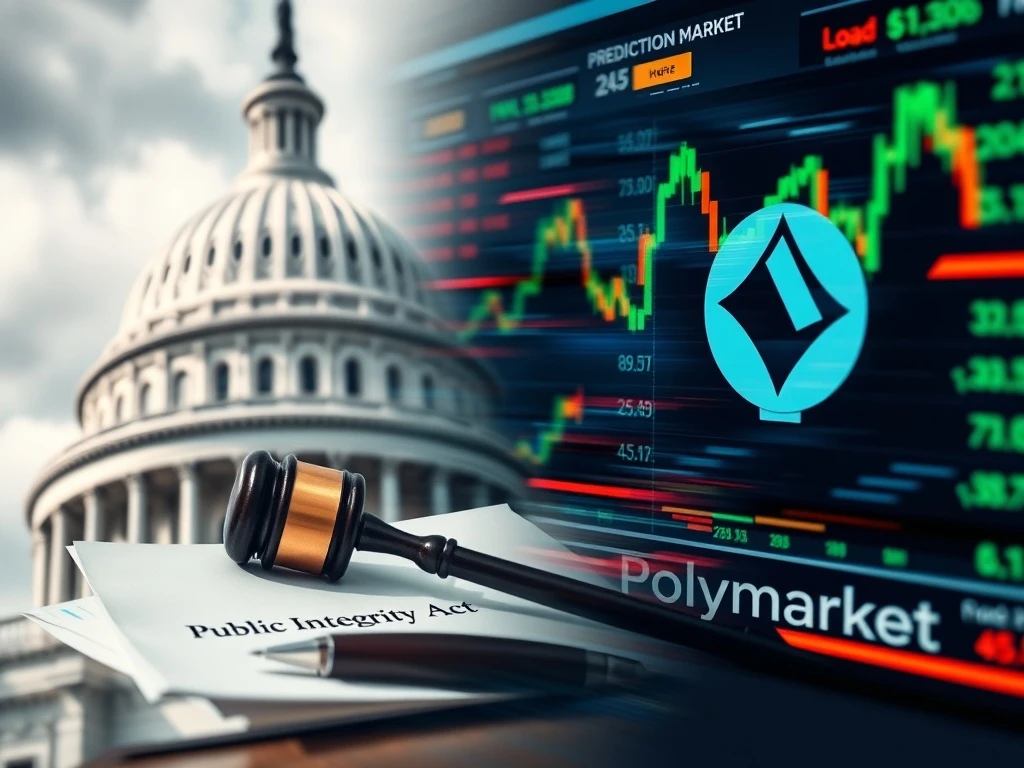
In a decisive move that could reshape the intersection of finance, politics, and cryptocurrency, a US lawmaker’s bill would ban politically related prediction bets following a high-profile $400,000 wager on the ouster of Venezuelan President Nicolás Maduro. Introduced by New York Representative Ritchie Torres on January 9, 2026, the proposed legislation directly responds to mounting fears of insider trading and corruption within decentralized prediction platforms. This development signals a pivotal regulatory clash between innovative financial technologies and the foundational principles of public trust in governance.
Understanding the Prediction Markets Ban Legislation
The Public Integrity in Financial Prediction Markets Act of 2026 represents a targeted legislative effort. Consequently, it aims to erect a firewall between federal officials and speculative markets tied to their work. Specifically, the bill prohibits federal elected officials, political appointees, Executive Branch employees, and congressional staff from trading prediction market contracts linked to government policy, action, or political outcomes. This prohibition activates when these individuals possess material nonpublic information or could reasonably obtain it through their official duties.
Representative Torres, backed by more than 30 other House Democrats, framed the issue in stark terms. “The most corrupt corner of Washington, DC may well be the intersection of prediction markets and the federal government,” Torres stated. “Where insider trading and self-dealing are no longer imagined risks but demonstrated dangers.” The legislation’s introduction follows a week of intense scrutiny after a Polymarket user netted over $400,000 from a $32,000 bet predicting Maduro’s removal by January 31, 2026—a prediction that materialized when US forces captured the Venezuelan leader.
The Catalyzing Event: A $400,000 Bet and Its Aftermath
The Maduro wager acted as the immediate catalyst for this legislative response. The bet, placed on the decentralized prediction platform Polymarket, gained extraordinary profits following President Donald Trump’s announcement that US forces had entered Venezuela and captured Maduro to face criminal charges in New York. This sequence of events ignited immediate concerns. Observers questioned whether the bettor had access to nonpublic, material information about the impending military and political action.
Furthermore, the incident highlighted the unique challenges prediction markets pose. Unlike traditional financial markets, these platforms often operate in regulatory gray areas. They allow users to speculate on real-world events, from elections to geopolitical conflicts. The rapid settlement in cryptocurrency and the global, pseudonymous nature of participation complicate oversight and enforcement of existing financial laws.
Broader Context: Prediction Markets and Regulatory Scrutiny
Prediction markets like Polymarket and Kalshi have grown significantly. They blend elements of gambling, financial speculation, and information aggregation. Proponents argue these markets efficiently aggregate dispersed knowledge, producing accurate forecasts. Critics, however, warn they create perverse incentives and vulnerabilities to manipulation, especially when insiders participate.
Torres’s bill explicitly addresses this insider threat. “Allowing an elected official to use platforms like Polymarket or Kalshi could incentivize him to personally push policies that line his pockets,” he argued. The legislation also references broader concerns about political figures and cryptocurrency. “Just as Donald Trump has been using crypto to enrich himself and his family, there is reason to fear that Trump or his associates could do the same when it comes to prediction markets,” Torres added, emphasizing that “no elected official is elected to profit from elected office.”
The table below outlines the key prohibited activities under the proposed bill:
| Prohibited Action | Applies To | Trigger Condition |
|---|---|---|
| Buying prediction market contracts | Federal officials & staff | Possession of material nonpublic info |
| Selling prediction market contracts | Political appointees | Ability to obtain info via official duties |
| Exchanging prediction market contracts | Executive Branch employees | Contracts tied to government outcomes |
Parallel Legislative Efforts: Crypto Market Structure
While Torres’s bill advances in the House, the Senate prepares its own significant crypto legislation. The Senate Banking Committee, chaired by Tim Scott, scheduled a markup for the Responsible Financial Innovation Act. This bill, known as the CLARITY Act in the House, aims to comprehensively reshape digital asset regulation. It proposes clearer roles for the Commodity Futures Trading Commission (CFTC) and the Securities and Exchange Commission (SEC).
This parallel movement suggests a maturing legislative approach to cryptocurrency and adjacent technologies. Lawmakers appear to be tackling the ecosystem from multiple angles: market structure for broader adoption and integrity-focused rules for specific, high-risk applications like political prediction markets. The outcome of these efforts will likely define the US regulatory landscape for years.
Industry Reaction and Unanswered Questions
The crypto industry watches these developments closely. Polymarket, the platform at the center of the controversy, did not respond to requests for comment on the proposed ban. The legislation raises several practical questions:
- Enforcement Mechanisms: How will compliance be monitored and violations proven, especially on decentralized or offshore platforms?
- Platform Liability: Will prediction market operators be required to implement know-your-customer (KYC) checks to screen for US government officials?
- Definitional Challenges: What precisely constitutes a “political outcome” or “government action” in a rapidly changing world?
Legal experts anticipate challenges. The bill must navigate First Amendment protections related to information and association. It also must interface with existing securities laws that already prohibit insider trading but may not clearly apply to event-based contracts.
Historical Precedents and Global Perspectives
The US is not the first jurisdiction to grapple with political prediction markets. Following the 2016 US presidential election, the European Securities and Markets Authority (ESMA) issued warnings about the risks of contracts for difference (CFDs) and binary options linked to political events. Several countries already restrict or ban betting on election outcomes, viewing it as a threat to electoral integrity.
However, the crypto-based, global nature of modern prediction markets presents a novel challenge. Traditional geographic and jurisdictional boundaries are less effective. The Torres bill, therefore, focuses on regulating the behavior of US persons rather than directly banning the platforms themselves—a pragmatic, though complex, enforcement strategy.
Conclusion
The proposed prediction markets ban marks a critical inflection point. It directly confronts the ethical and legal dilemmas posed by allowing public officials to speculate on events they influence. Driven by a specific, high-value incident involving a Maduro wager, the legislation seeks to prevent insider trading and maintain public confidence. As the bill moves through the House and parallel market structure legislation advances in the Senate, 2026 is poised to be a defining year for cryptocurrency regulation. The core challenge remains: crafting rules that prevent corruption and market abuse without stifling financial innovation or infringing on personal liberties. The outcome will significantly impact the future of decentralized finance and political accountability.
FAQs
Q1: What is the Public Integrity in Financial Prediction Markets Act of 2026?
The bill, introduced by Rep. Ritchie Torres, would ban US federal officials, appointees, and staff from trading prediction market contracts tied to government actions or political outcomes if they possess or can access material nonpublic information through their duties.
Q2: What event triggered this legislation?
The immediate catalyst was a Polymarket user netting over $400,000 from a $32,000 bet predicting the removal of Venezuelan President Nicolás Maduro, which occurred just days before US forces captured him. This raised significant insider trading concerns.
Q3: Who would be affected by this prediction markets ban?
The prohibition would apply to federal elected officials, political appointees, Executive Branch employees, and congressional staff members when trading contracts related to their sphere of influence.
Q4: How does this relate to other crypto legislation in 2026?
Simultaneously, the Senate is marking up the Responsible Financial Innovation Act (CLARITY Act), a broad market structure bill. The two efforts represent a multi-front regulatory approach to the crypto ecosystem.
Q5: What are the main arguments for and against such a ban?
Proponents argue it prevents insider trading and corrupt incentives for officials. Critics may cite enforcement difficulties, definitional vagueness, and potential overreach into personal financial activities. The debate centers on balancing integrity with innovation.