Solana 2026 Playbook: Blockdaemon’s Strategic Blueprint Captivates Institutional Investors
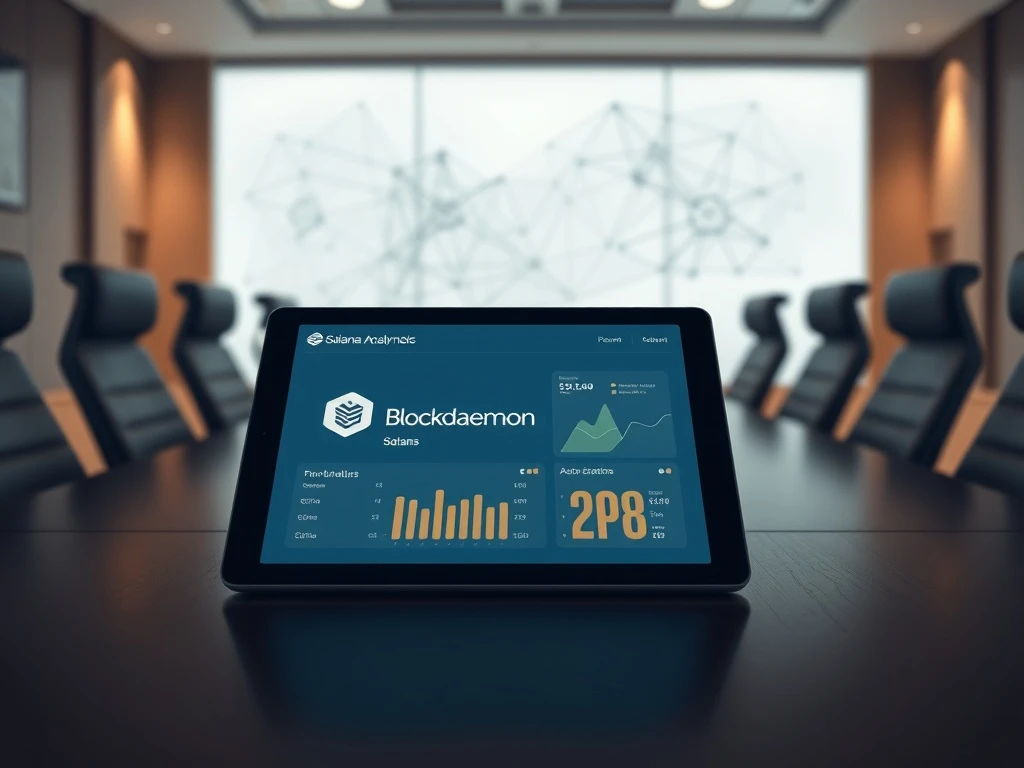
NEW YORK, April 2025 – Infrastructure giant Blockdaemon has released a comprehensive two-part strategic analysis targeting Solana’s trajectory through 2026, immediately capturing attention across institutional finance circles. The detailed playbook, comprising both an executive guide and technical roadmap, represents a significant milestone in blockchain infrastructure providers directly addressing traditional financial institutions’ specific due diligence requirements. Consequently, this publication signals a maturation in how enterprise-grade crypto analysis reaches decision-makers.
Blockdaemon’s Solana 2026 Playbook: A Dual-Pronged Institutional Approach
Blockdaemon published the analysis through its official channels on April 15, 2025, framing it specifically for financial institutions evaluating blockchain integration. The firm structured the content into two distinct but complementary documents. Firstly, an executive guide translates Solana’s technical capabilities into traditional finance risk and opportunity frameworks. Secondly, a technical roadmap provides granular detail on network upgrades, performance benchmarks, and security protocols scheduled through 2026. This bifurcated approach directly addresses the different informational needs within an institution, from C-suite executives to technical implementation teams.
Industry analysts immediately noted the publication’s timing. Specifically, it arrives during a period of increased institutional experimentation with blockchain settlement layers. Moreover, Solana has demonstrated notable network stability and throughput improvements throughout 2024. Blockdaemon’s analysis, therefore, provides a structured, vendor-agnostic framework for institutions to assess these developments. The guide avoids promotional language, instead focusing on verifiable network metrics, governance processes, and comparative architecture.
The Technical Roadmap: Key Upgrades and Institutional Implications
The technical section of the playbook details several scheduled upgrades. For instance, it covers the continued optimization of Solana’s QUIC protocol and stake-weighted quality of service. Furthermore, it analyzes the implementation timeline for Firedancer, the independent validator client developed by Jump Crypto. Blockdaemon’s analysis projects how these upgrades will affect key performance indicators like transactions per second (TPS), finality times, and network redundancy. The report provides a clear, evidence-based timeline, correlating technical milestones with potential use-case expansions for institutional players.
Blockdaemon supports its analysis with historical network data. The table below summarizes key performance metrics cited in the context of future projections:
| Metric | 2024 Status | 2026 Projection (per Playbook) | Institutional Relevance |
|---|---|---|---|
| Average TPS (Sustained) | ~2,500-3,000 | ~5,000-7,000+ | High-frequency settlement viability |
| Time to Finality | ~2-3 seconds | Sub-1 second target | Real-time finance applications |
| Validator Decentralization | ~1,900+ validators | Continued geographic/distribution growth | Network resilience and compliance |
| Fee Market Stability | Improved with priority fees | Predictable fee structures | Cost forecasting for enterprises |
On-Chain Finance Strategy: Bridging TradFi and DeFi
The second core pillar of Blockdaemon’s analysis explores Solana’s strategic positioning for on-chain finance (OnFi). This section moves beyond pure technology to examine economic models, liquidity fragmentation, and interoperability. Significantly, it identifies specific areas where Solana’s architecture aligns with institutional needs:
- Institutional-Grade Liquidity Pools: The analysis examines the growth of permissioned liquidity venues and large-block trading facilities being built on Solana.
- Regulatory Compliance Pathways: It outlines how native features like program-derived addresses (PDAs) can facilitate compliance-aware smart contract design.
- Asset Tokenization Infrastructure: The playbook assesses Solana as a potential settlement layer for tokenized real-world assets (RWAs), citing its low transaction costs and high throughput.
- Institutional Staking and Delegation: A detailed breakdown of the staking ecosystem, including slashing risks, reward structures, and the role of professional node operators.
This strategic analysis does not exist in a vacuum. It references broader market trends, including the growing involvement of asset managers like BlackRock and Franklin Templeton in digital asset ecosystems. By connecting Solana’s technical roadmap to these macro trends, Blockdaemon provides context that resonates with institutional strategists.
Expert Context and Market Impact
The release follows increased dialogue between blockchain foundations and financial regulators. In recent months, entities like the Solana Foundation have engaged in more structured outreach to policymakers. Blockdaemon’s playbook serves as a technical companion to these efforts. It provides the substantive, engineering-focused detail that institutional technology committees require for approval processes. Infrastructure analysts view this as part of a larger trend where middleware and node service providers act as crucial translators between blockchain protocols and traditional enterprise.
Furthermore, the publication’s impact extends beyond Solana. It establishes a potential template for how other Layer 1 blockchains might present their development roadmaps to a professional investor audience. The focus on measurable outcomes, risk factors, and clear timelines aligns with the due diligence standards of pension funds, endowments, and investment banks. Early feedback from fintech conferences suggests the guide is being circulated among digital asset working groups at several major global banks.
Conclusion
Blockdaemon’s 2026 Solana playbook represents a sophisticated, targeted resource for financial institutions navigating blockchain integration. By dissecting both the technical roadmap and on-chain finance strategy, it addresses the dual concerns of feasibility and applicability. The guide’s neutral, evidence-based tone and clear structure enhance its authority and usefulness. As institutional crypto adoption progresses, such detailed, vendor-agnostic analysis will likely become increasingly critical for investment and strategic planning committees. Ultimately, Blockdaemon’s publication underscores a pivotal shift: blockchain infrastructure is now being analyzed and presented through the rigorous lens of traditional institutional finance.
FAQs
Q1: What is the primary purpose of Blockdaemon’s Solana 2026 playbook?
The primary purpose is to provide financial institutions with a structured, detailed framework for evaluating Solana’s technical development and on-chain finance potential through 2026, supporting their due diligence and strategic planning processes.
Q2: Who is the target audience for this analysis?
The target audience includes C-suite executives, digital asset strategists, technology implementation teams, and investment analysts at traditional financial institutions like banks, asset managers, hedge funds, and pension funds.
Q3: What are the key technical upgrades highlighted for Solana through 2026?
Key upgrades include the full deployment and optimization of Firedancer validator client, enhancements to the QUIC protocol for network stability, further development of stake-weighted QoS, and continued improvements to transaction processing speed and fee predictability.
Q4: How does the playbook address risks for institutions?
It addresses risks by providing objective analysis of network decentralization, validator client diversity, security protocols, historical downtime events, and the regulatory evolution surrounding the network’s core operations and staking mechanics.
Q5: Why is the concept of “on-chain finance” (OnFi) important in this context?
On-chain finance is important because it represents the convergence of traditional financial products with blockchain settlement. The playbook analyzes how Solana’s architecture could support institutional use cases like tokenized assets, compliant DeFi, and large-scale liquidity management, which are direct concerns for traditional finance entities.